
You sit down to work feeling fine.
By lunchtime, your lower back feels tight.
By evening, you’re shifting constantly in your chair, stretching every few minutes, or rubbing an aching neck. Sound familiar?
If you spend six to ten hours at a desk every day, you’re far from alone. Office workers across India are experiencing increasing levels of back pain, neck stiffness and poor posture, often assuming it’s simply part of modern work.
The truth is that sitting itself isn’t the problem.
The real issue is sitting in the same position for hours while the muscles designed to support your spine gradually become weaker and less active.
Understanding why this happens is the first step towards fixing it.
Why Sitting All Day Causes Back Pain
Your body was designed for movement, not prolonged stillness.
When you remain seated for long periods, certain muscles become inactive while others become tight and overworked. Over time, this creates muscular imbalances that place extra stress on your spine.
Instead of your muscles sharing the workload evenly, your joints, ligaments and lower back begin compensating.
Eventually, discomfort becomes your normal.
The Muscles That Become Weak
1. Glutes
Your glute muscles are among the strongest muscles in the body.
They stabilise your hips, support your pelvis and help protect your lower back whenever you walk, climb stairs or lift objects.
Hours of sitting reduce glute activation, a condition sometimes called “sleepy glutes” or gluteal inhibition.
When your glutes stop doing their job, your lower back takes over.
The result is increased strain and discomfort.
2. Deep Core Muscles
Your abdominal muscles do much more than create a six-pack.
Deep core muscles act like a natural brace around your spine.
Prolonged sitting often leads to reduced core engagement, meaning your back receives less support throughout the day.
Without adequate core stability, even simple movements like standing up or reaching for something can place additional stress on your spine.
3. Hip Flexors
Hip flexors shorten whenever you sit.
After hours in a seated position, they become tight and restrict normal hip movement.
Tight hip flexors pull the pelvis forward into an excessive anterior tilt, increasing pressure on the lumbar spine.
Many people mistake this for “lower back weakness” when the real issue begins at the hips.
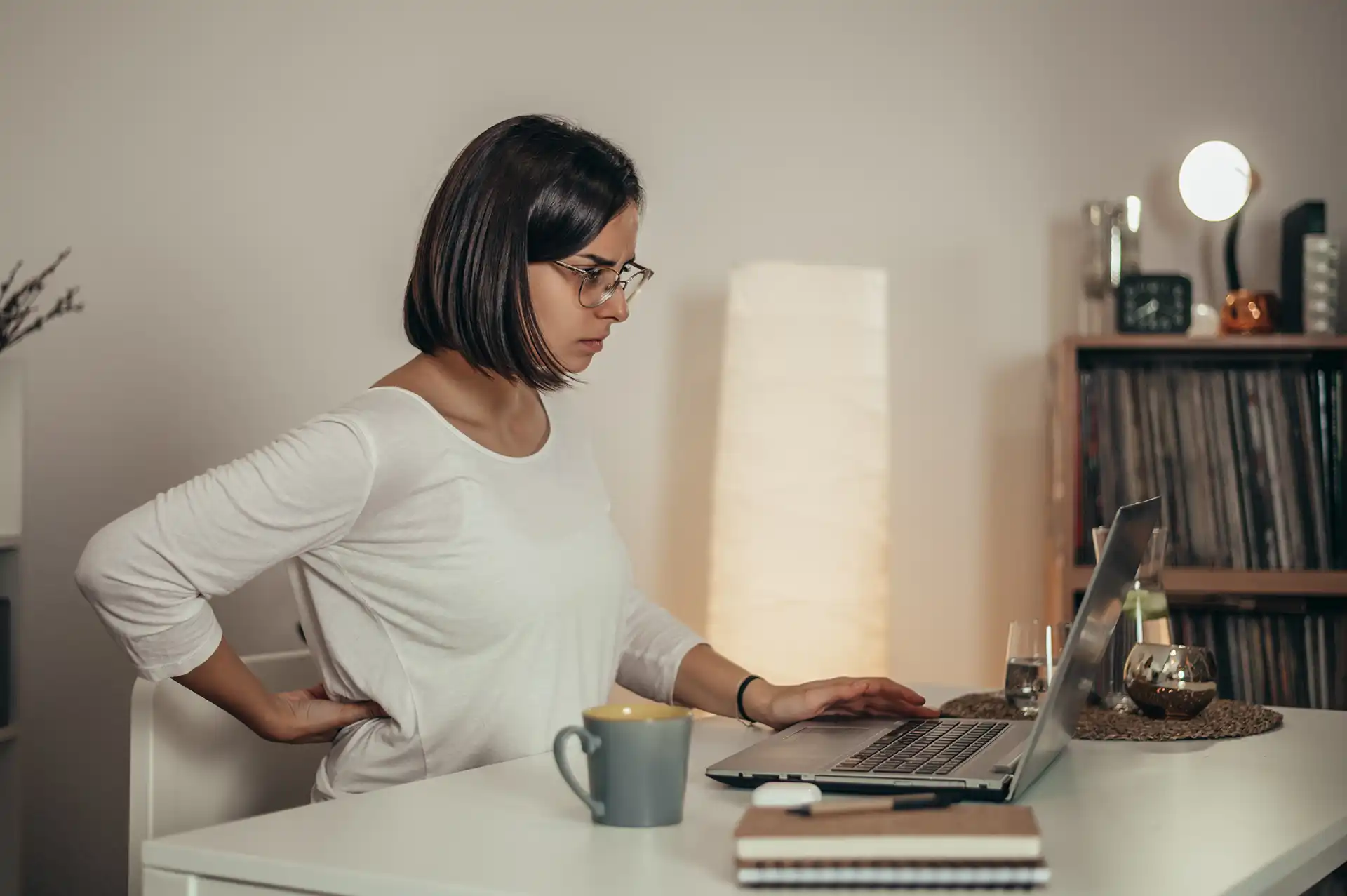
How Weak Muscles Lead to Back Pain
Think of your body like a suspension bridge.
Every cable shares the load.
If several cables become loose, the remaining ones carry extra weight.
Your body works the same way.
Weak glutes, inactive core muscles and tight hips force your lower back muscles to compensate constantly.
Instead of stabilising the spine occasionally, they work all day.
Eventually they become:
- Tight
- Fatigued
- Painful
- Inflamed
The pain you feel is often a symptom rather than the root cause.
Signs Your Desk Job Is Affecting Your Body
You may notice:
- Lower back pain after sitting
- Tight hips
- Neck stiffness
- Rounded shoulders
- Headaches
- Difficulty standing upright after long meetings
- Pain that improves after walking
These signs indicate that your movement patterns need attention.
Five Movement Corrections You Can Start Today
The good news is that you don’t need to quit your job to improve your back.
Small movement habits performed consistently often make a significant difference.
1. Stand Up Every 30 to 45 Minutes
Your body thrives on movement.
Set a reminder to stand, walk to get water or simply stretch for one or two minutes.
These frequent movement breaks restore blood flow and reduce stiffness.
Even a short walk around the office can help.
2. Activate Your Glutes
Glute activation helps wake up muscles that have been inactive for hours.
Try:
- Glute squeezes while sitting
- Standing hip extensions
- Glute bridges at home
- Bodyweight squats
Focus on controlled movement rather than speed.
3. Stretch Your Hip Flexors
One of the most effective stretches for desk workers is the kneeling hip flexor stretch.
Hold each side for 30 to 45 seconds.
Repeat two or three times.
This helps restore hip mobility and reduces the forward pull on your pelvis.
4. Strengthen Your Core
Instead of endless crunches, focus on stability exercises.
Good options include:
- Dead bugs
- Bird dogs
- Planks
- Side planks
These exercises train your body to support the spine during everyday movement.
5. Improve Your Sitting Position
Good posture doesn’t mean sitting perfectly upright all day.
Instead:
- Keep both feet flat on the floor.
- Position your screen at eye level.
- Relax your shoulders.
- Keep your elbows close to your body.
- Change position regularly.
The best posture is your next posture.
Frequent movement is more valuable than holding one “perfect” position for hours.
Why Stretching Alone Isn't Enough
Many people experience temporary relief after stretching.
The pain decreases.
The stiffness disappears.
Then it returns the next morning.
Why?
Because stretching addresses muscle tightness but not muscle weakness.
If your glutes remain inactive and your core remains weak, your body continues returning to the same movement pattern that caused the pain.
Mobility without strength rarely creates lasting change.
Why Structured Movement Coaching Works Better
Back pain rarely has a single cause.
Everyone moves differently.
Some people need stronger hips.
Others need better spinal mobility.
Some simply need to learn how to move more efficiently throughout the day.
A structured coaching programme identifies your specific movement limitations instead of applying generic exercises.
Rather than chasing symptoms, it addresses the underlying reasons your body is compensating.
Over time, this approach helps improve:
- Posture
- Strength
- Mobility
- Movement confidence
- Daily comfort
- Long-term resilience
The goal isn’t simply to eliminate pain.
It’s to help your body move well enough that pain becomes less likely to return.
Prevention Is Easier Than Recovery
Back pain develops gradually.
Fortunately, so does recovery.
Small habits repeated consistently are often more effective than occasional intense workouts.
Walking more.
Strengthening your glutes.
Building core stability.
Improving mobility.
Taking regular movement breaks.
Together, these simple actions can transform how your body feels after a long workday.
At Califitoga, we believe movement should help you feel stronger, healthier and more capable every day. With the right guidance, you can build a body that supports your work instead of suffering because of it.
Frequently Asked Questions
Why does my back hurt after sitting all day?
Prolonged sitting reduces glute and core activation while tightening the hip flexors. These muscular imbalances place additional stress on the lower back, leading to stiffness and discomfort.
Can sitting all day permanently damage my back?
In most cases, sitting alone does not permanently damage the spine. However, long-term poor movement habits can contribute to chronic pain if they are not addressed through regular movement and strengthening.
How often should I stand up while working?
Aim to stand or walk briefly every 30 to 45 minutes. Even one or two minutes of movement can help reduce stiffness and improve circulation.
Is stretching enough to relieve desk-related back pain?
Stretching can provide temporary relief, but lasting improvement usually requires strengthening weak muscles such as the glutes and core while improving movement patterns.
What is the best exercise for lower back pain caused by sitting?
There isn’t one exercise that works for everyone. A combination of glute bridges, bird dogs, dead bugs, planks and hip flexor stretches is often highly effective for improving strength, stability and mobility.
Can calisthenics help with back pain?
Yes. When taught progressively, calisthenics improves posture, core strength, hip stability and body control. These qualities help reduce many of the movement issues associated with prolonged sitting.

Related Posts
What Is Calisthenics? A Complete Beginner’s Guide for Indians
When you are alone for days or weeks at a time, you eventually become drawn to…


Calisthenics vs Gym: Which Is Better for You?
Just the other day I happened to wake up early. That is unusual for an…

How to Fix Poor Posture Caused by Sitting All Day
One of the easiest ways to improve travel photos is shooting in better light,…